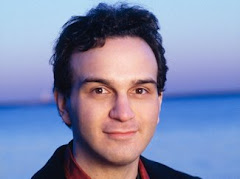
A reasonably sized audience attended a mid-week violin and piano recital by James Ehnes and Andrew Armstrong. Considering the travelling difficulties of getting into Dewan Filharmonik Petronas Kuala Lumpur in the middle of a working weekday, the faithful audience were treated to a superb and eclectic recital by this eminent duo.
Beethoven's earliest violin and piano opus, the Violin Sonata Op 12 No 1 was Ehnes' and Armstrong's first offering. Adopting a bright and lively tempo, the duo's brilliant tone (thanks to Ehnes' lovely 1715 Marsick Stradivarius and Armstrong's Steinway) set Beethoven's opening joyous movement into motion. The duo's balance and "give-and-take" was exemplary and this was maintained into the second movement's theme and variations. This was particularly palpable in the minor variation's large dynamic swells. Ehnes and Armstrong imbued the ensuing final Rondo: Allegro with gruff Beethovenian humour and its characteristic offbeat accents and distant modulations.
Ehnes and Armstrong proffered us Ravel's Second Violin Sonata in G major next. The duo's polished playing was entirely appropriate for one of gentlest opening movements of the Romantic violin sonata repertoire. The modal melodies flowed sweetly, graced by warm and judiciously applied vibrato adding significantly to Ehnes' ethereal and shimmering tone. The middle blues movement took on an insouciant character, with subtly graded rubati and portamenti enhancing its obvious musical homage to Gershwin. The Perpetuum mobile finale was brilliant executed and crisply played.
After the interval, the second half opened with Brahms’ Scherzo from the FAE Sonata, performed pleasingly with a lighter than usual touch reflecting the "joke-like" character of a Scherzo, rather than the heavier approach that duos mostly apply to the piece. To end the recital, Ehnes and Armstrong gave us a wonderfully virtuosic rendition of Corigliano's tonally exciting and rhythmically exacting Violin Sonata of 1962-1963.
For his encores, Ehnes elected for mainly technical wizardry, performing Heifetz’s arrangement of Rimsky-Korsakov’s Flight of the Bumblebee with stunning spiccato bow strokes that barely lifted off the violin strings. The next two encores were Sarasate's Zapateado Op 23 No 2, played dashingly with pristine artificial harmonics and superb cracking left-hand pizzicati and Wieniawski's Scherzo tarantelle Op 16, performed with a Heifetz-like intensity but with Milstein's fluidity and purity.
Just when the audience thought Ehnes would play a further string of encores like Itzhak Perlman does in recital, he chose to say goodnight with his final encore, the rarely-played and touching Sibelius Berceuse (No 6 of Six Pieces Op 79). What sets Ehnes apart from other modern-day virtuosi is that even in his first three encore pieces, he never overtly showboats his violinistic skills – if anything he is so unassuming that one forgets how fiendishly arduous those pieces are.
Showing posts with label Ravel. Show all posts
Tuesday, 20 November 2018
Monday, 14 May 2018
Skride & Danis star in Prokofiev's First Violin Sonata.
Baiba Skride offered the KL audience a captivating solo violin as well as a violin and piano recital after her dazzling performance of the Sibelius Violin Concerto with Gilbert Varga and the MPO from the night before.
Skride opened her recital with JS Bach's Solo Sonata No 1 in G minor BWV1001. In the opening improvisatory Adagio, Skride quickly entered a kind of personal cosmos, offering the entirely hushed audience a gorgeous reading of this sublime movement. In the following Fugue, she showed impassioned playing whilst exhibiting supreme confidence and technical accuracy in the nefarious multiple stopping of the complex fugal patterns. In the lilting Siciliano, Skride displayed remarkable subtle variations in her tone and expression. In the concluding Presto, the line scurried back and forth at warp speed with remarkable energy throughout the running semi-quaver figurations.
A thematic link to Skride's next offering was the fact that Eugène Ysaÿe wrote his Solo Sonata Op 27 No 1 in G minor after he heard the famous late Hungarian violin Joseph Szigeti playing Bach's BWV1001. Dedicated to Szigeti, Ysaÿe's work also abounds in technical difficulties. Skride despatched the opening Grave with its challenging multiple stopping magnificently, whilst imparting a musing and frail quality to the Fugato second movement. In the Allegretto poco scherzoso third movement, Skride made wide contrasts of the jazzy and pastoral elements of the music and concluded grandly in the Finale.
Prokofiev's Violin Sonata No 1 in F minor Op 80 was Skride's next offering. Joined by pianist Akiko Danis, Skride gave a magnificent account of this sonata which is increasingly popular on recordings and in the concert hall. Skride's carefully graded bowing suited the sombre and contemplative opening of the Andante Assai, whilst the muted ascending and descending violin scales created the effect of "wind in the graveyard" as the composer once described.
The second movement, the Allegro brusco, seemed to have been conceived of as a savage conflict between warring forces, represented by the piano and violin, both engaged in bitonal octaves and discordant rhythmic cross-fire. As a contrast to the barbaric second movement, Skride’s muted violin playing and Danis’ great delicacy in shading on the piano were most impressive in the gentle Andante third movement. The rhythmic shifts in metre of the final movement were expertly dealt with by Skride and Danis. The return of the first movement theme was played with icy beauty before a funereal knell brought the sonata to its enigmatic close.
Ravel’s virtuosic Tzigane closed the well-balanced programme. The opening solo violin passage was hypnotic in Skride's hands, with potency and warmth as well as a generous sprinkling of glitter and exhilarating changes of pace. However, some serious timing and ensemble problems between the violin and piano emerged in the Quasi cadenza section before resolution emerged ahead of the Moderato segment. Danis' piano support was sympathetic and pinpoint, with the duo bringing out all the colours with abounding technical brilliance and clearly having fun with the quirkiness and sheer gypsy virtuoso extravaganza.
Skride opened her recital with JS Bach's Solo Sonata No 1 in G minor BWV1001. In the opening improvisatory Adagio, Skride quickly entered a kind of personal cosmos, offering the entirely hushed audience a gorgeous reading of this sublime movement. In the following Fugue, she showed impassioned playing whilst exhibiting supreme confidence and technical accuracy in the nefarious multiple stopping of the complex fugal patterns. In the lilting Siciliano, Skride displayed remarkable subtle variations in her tone and expression. In the concluding Presto, the line scurried back and forth at warp speed with remarkable energy throughout the running semi-quaver figurations.
A thematic link to Skride's next offering was the fact that Eugène Ysaÿe wrote his Solo Sonata Op 27 No 1 in G minor after he heard the famous late Hungarian violin Joseph Szigeti playing Bach's BWV1001. Dedicated to Szigeti, Ysaÿe's work also abounds in technical difficulties. Skride despatched the opening Grave with its challenging multiple stopping magnificently, whilst imparting a musing and frail quality to the Fugato second movement. In the Allegretto poco scherzoso third movement, Skride made wide contrasts of the jazzy and pastoral elements of the music and concluded grandly in the Finale.
Prokofiev's Violin Sonata No 1 in F minor Op 80 was Skride's next offering. Joined by pianist Akiko Danis, Skride gave a magnificent account of this sonata which is increasingly popular on recordings and in the concert hall. Skride's carefully graded bowing suited the sombre and contemplative opening of the Andante Assai, whilst the muted ascending and descending violin scales created the effect of "wind in the graveyard" as the composer once described.
The second movement, the Allegro brusco, seemed to have been conceived of as a savage conflict between warring forces, represented by the piano and violin, both engaged in bitonal octaves and discordant rhythmic cross-fire. As a contrast to the barbaric second movement, Skride’s muted violin playing and Danis’ great delicacy in shading on the piano were most impressive in the gentle Andante third movement. The rhythmic shifts in metre of the final movement were expertly dealt with by Skride and Danis. The return of the first movement theme was played with icy beauty before a funereal knell brought the sonata to its enigmatic close.
Ravel’s virtuosic Tzigane closed the well-balanced programme. The opening solo violin passage was hypnotic in Skride's hands, with potency and warmth as well as a generous sprinkling of glitter and exhilarating changes of pace. However, some serious timing and ensemble problems between the violin and piano emerged in the Quasi cadenza section before resolution emerged ahead of the Moderato segment. Danis' piano support was sympathetic and pinpoint, with the duo bringing out all the colours with abounding technical brilliance and clearly having fun with the quirkiness and sheer gypsy virtuoso extravaganza.
Labels:
Akiko Danis,
Baiba Skride,
JS Bach,
Prokofiev,
Ravel,
Tzigane,
Ysaye
Monday, 22 January 2018
Youthful musical vigour
Billed as the "Elixir of Youth" concert, the MPYO presented us with a varied programme that worked backwards in time from 2017 to 1893. The offering from 2017 was a world premiere that the MPYO commissioned from 19-year old Tengku Irfan, entitled What Does It Take to Dance? We were fortunate to witness a very good performance of the piece which featured elements of dance like Waltz, Ländler and Zapin conducted impressively by the youthful composer.
Tengku Irfan then conducted the most notable performance of the afternoon - Barber's Second Essay Op 17 from 1942. The Essay is a colourfully orchestrated work. Tengku Irfan highlighted its wistful moments by the expressive woodwinds at the outset which were countered by dramatic tensions in which timpani and brass made an impressive impact. A warm patina of string tone also contributed to a fine and heartfelt performance by Tengku Irfan and the MPYO.
The final offering of the first half was clearly intended to be the showstopper of this concert. Having watched the thirteen-year-old Low Zi Yang perform well at a couple of high level masterclasses in KL with Nemanja Radulović and Renaud Capuçon in demanding pieces like Mendelssohn's Violin Concerto Op 64 (first movement), Paganini's 24th Caprice and Ravel's Tzigane before, I was a touch disappointed as Zi Yang initially seemed slightly overawed by the occasion.
Zi Yang seemed a touch nervous in the opening lassu soliloquy on the violin's lowest G-string of Ravel's Tzigane of 1924, often over-pressing with the bow on the on-loan mellow-toned Andreas Postacchini violin. With over-pressing of the bow as well as the fast and wider-than-tolerable vibrato, his intonation suffered at the higher reaches of the G-string. Perhaps a better violin with "Guarneri-like" characteristics could have aided Zi Yang's solo debut with the MPYO.
His form improved as the piece wore on, gaining in confidence as the opening soliloquy was repeated in octaves. As he played the faster "friss" section, he had the self-assuredness to tackle the myriad of double-stops, natural and artificial harmonics, left-hand pizzicatos and glissando with aplomb. Conductor Naohisa Furusawa, who had taken over the podium, had to adjust the balance of the orchestra judiciously as the Postacchini violin had a weak E-string and lacked the brilliance and carrying power to cut through some of Ravel's heavier orchestral textures. Interpretatively, Zi Yang's earnest performance of Ravel's Tzigane was slightly earth-bound and lacked the gypsy fire that is inherent in the music.
The concert concluded with a good performance of Dvořák’s beloved Symphony No.9 “From the New World” of 1893. Tackling the popular score impressively from memory, Furusawa led the symphony at high tempi, often driving the three swift outer movements at breathless speeds, verging on a hectoring approach. He was fairly faithful to the score though and observed the exposition repeat in the first movement where some questionable woodwind tuning intruded.
Furusawa and the MPYO were quite surprisingly good in the Largo, and the beautifully intoned cor anglais solo was also taken up by the principal oboist. Dvorak's lovely melodies flowed with a gentle lilt throughout this gorgeous movement.
Furusawa reverted to the hectoring approach in the final two movements. There was little gracefulness apparent in the charming and lilting Trio section of the third movement, whilst the highly-strung approach towards the fourth movement was the fastest I have ever heard. Dvorak's most popular symphony needs a symphonic approach with a patient hand over the transitional passages as the great Czech conductors like Karel Ančerl, Rafael Kubelík and Václav Talich could provide. Furusawa's interpretation definitely fell by the wayside of the great Czech conductors.
The MPYO and Furusawa acknowledged the generous applause by rewarding the audience with an encore in a dashingly virile account of the Main Title from Star Wars, in anticipation of the release of the latest The Last Jedi blockbuster.
Tengku Irfan then conducted the most notable performance of the afternoon - Barber's Second Essay Op 17 from 1942. The Essay is a colourfully orchestrated work. Tengku Irfan highlighted its wistful moments by the expressive woodwinds at the outset which were countered by dramatic tensions in which timpani and brass made an impressive impact. A warm patina of string tone also contributed to a fine and heartfelt performance by Tengku Irfan and the MPYO.
The final offering of the first half was clearly intended to be the showstopper of this concert. Having watched the thirteen-year-old Low Zi Yang perform well at a couple of high level masterclasses in KL with Nemanja Radulović and Renaud Capuçon in demanding pieces like Mendelssohn's Violin Concerto Op 64 (first movement), Paganini's 24th Caprice and Ravel's Tzigane before, I was a touch disappointed as Zi Yang initially seemed slightly overawed by the occasion.
Zi Yang seemed a touch nervous in the opening lassu soliloquy on the violin's lowest G-string of Ravel's Tzigane of 1924, often over-pressing with the bow on the on-loan mellow-toned Andreas Postacchini violin. With over-pressing of the bow as well as the fast and wider-than-tolerable vibrato, his intonation suffered at the higher reaches of the G-string. Perhaps a better violin with "Guarneri-like" characteristics could have aided Zi Yang's solo debut with the MPYO.
His form improved as the piece wore on, gaining in confidence as the opening soliloquy was repeated in octaves. As he played the faster "friss" section, he had the self-assuredness to tackle the myriad of double-stops, natural and artificial harmonics, left-hand pizzicatos and glissando with aplomb. Conductor Naohisa Furusawa, who had taken over the podium, had to adjust the balance of the orchestra judiciously as the Postacchini violin had a weak E-string and lacked the brilliance and carrying power to cut through some of Ravel's heavier orchestral textures. Interpretatively, Zi Yang's earnest performance of Ravel's Tzigane was slightly earth-bound and lacked the gypsy fire that is inherent in the music.
The concert concluded with a good performance of Dvořák’s beloved Symphony No.9 “From the New World” of 1893. Tackling the popular score impressively from memory, Furusawa led the symphony at high tempi, often driving the three swift outer movements at breathless speeds, verging on a hectoring approach. He was fairly faithful to the score though and observed the exposition repeat in the first movement where some questionable woodwind tuning intruded.
Furusawa and the MPYO were quite surprisingly good in the Largo, and the beautifully intoned cor anglais solo was also taken up by the principal oboist. Dvorak's lovely melodies flowed with a gentle lilt throughout this gorgeous movement.
Furusawa reverted to the hectoring approach in the final two movements. There was little gracefulness apparent in the charming and lilting Trio section of the third movement, whilst the highly-strung approach towards the fourth movement was the fastest I have ever heard. Dvorak's most popular symphony needs a symphonic approach with a patient hand over the transitional passages as the great Czech conductors like Karel Ančerl, Rafael Kubelík and Václav Talich could provide. Furusawa's interpretation definitely fell by the wayside of the great Czech conductors.
The MPYO and Furusawa acknowledged the generous applause by rewarding the audience with an encore in a dashingly virile account of the Main Title from Star Wars, in anticipation of the release of the latest The Last Jedi blockbuster.
Labels:
Barber,
Dvorak,
From The New World,
Low Zi Yang,
MYPO,
Naohisa Furusawa,
Ravel,
Tengku Irfan,
Tzigane
Subscribe to:
Posts (Atom)