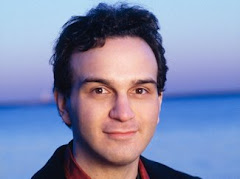
Tengku Irfan then conducted the most notable performance of the afternoon - Barber's Second Essay Op 17 from 1942. The Essay is a colourfully orchestrated work. Tengku Irfan highlighted its wistful moments by the expressive woodwinds at the outset which were countered by dramatic tensions in which timpani and brass made an impressive impact. A warm patina of string tone also contributed to a fine and heartfelt performance by Tengku Irfan and the MPYO.

The final offering of the first half was clearly intended to be the showstopper of this concert. Having watched the thirteen-year-old Low Zi Yang perform well at a couple of high level masterclasses in KL with Nemanja Radulović and Renaud Capuçon in demanding pieces like Mendelssohn's Violin Concerto Op 64 (first movement), Paganini's 24th Caprice and Ravel's Tzigane before, I was a touch disappointed as Zi Yang initially seemed slightly overawed by the occasion.
Zi Yang seemed a touch nervous in the opening lassu soliloquy on the violin's lowest G-string of Ravel's Tzigane of 1924, often over-pressing with the bow on the on-loan mellow-toned Andreas Postacchini violin. With over-pressing of the bow as well as the fast and wider-than-tolerable vibrato, his intonation suffered at the higher reaches of the G-string. Perhaps a better violin with "Guarneri-like" characteristics could have aided Zi Yang's solo debut with the MPYO.

His form improved as the piece wore on, gaining in confidence as the opening soliloquy was repeated in octaves. As he played the faster "friss" section, he had the self-assuredness to tackle the myriad of double-stops, natural and artificial harmonics, left-hand pizzicatos and glissando with aplomb. Conductor Naohisa Furusawa, who had taken over the podium, had to adjust the balance of the orchestra judiciously as the Postacchini violin had a weak E-string and lacked the brilliance and carrying power to cut through some of Ravel's heavier orchestral textures. Interpretatively, Zi Yang's earnest performance of Ravel's Tzigane was slightly earth-bound and lacked the gypsy fire that is inherent in the music.

The concert concluded with a good performance of Dvořák’s beloved Symphony No.9 “From the New World” of 1893. Tackling the popular score impressively from memory, Furusawa led the symphony at high tempi, often driving the three swift outer movements at breathless speeds, verging on a hectoring approach. He was fairly faithful to the score though and observed the exposition repeat in the first movement where some questionable woodwind tuning intruded.
Furusawa and the MPYO were quite surprisingly good in the Largo, and the beautifully intoned cor anglais solo was also taken up by the principal oboist. Dvorak's lovely melodies flowed with a gentle lilt throughout this gorgeous movement.
Furusawa reverted to the hectoring approach in the final two movements. There was little gracefulness apparent in the charming and lilting Trio section of the third movement, whilst the highly-strung approach towards the fourth movement was the fastest I have ever heard. Dvorak's most popular symphony needs a symphonic approach with a patient hand over the transitional passages as the great Czech conductors like Karel Ančerl, Rafael Kubelík and Václav Talich could provide. Furusawa's interpretation definitely fell by the wayside of the great Czech conductors.

The MPYO and Furusawa acknowledged the generous applause by rewarding the audience with an encore in a dashingly virile account of the Main Title from Star Wars, in anticipation of the release of the latest The Last Jedi blockbuster.