Having stayed away from the DFP Hall for almost 6 months, I ventured to watch a perennial favourite guest conductor with the Malaysian Philharmonic Orchestra (MPO), Roberto Abbado in a programme entitled "Tales of Triumph" on 1 December. The concert began with Beethoven's Coriolan Overture Op 62, after Heinrich von Collin's play. Abbado and the MPO's account could perhaps have benefited from revealing more of Beethoven’s rougher edges as well as greater drama and turbulence in the tense opening of the overture. However, Abbado's lyrical "con amore" manner of playing the poignant second subject was masterfully conveyed.
Next on the programme was Hindemith's Mathis der Maler (Matthias the Painter), which was first performed in Berlin in 1934 but was receiving its first Malaysian performance at the DFP in front of an unsophisticated KL audience. The MPO and Abbado delivered the opening “Angelic Concert” with a serene joy and clarity that distinguished its varied polyphonic voices. The hushed interplay between solo woodwinds and pizzicato strings of the second movement (“Entombment”) recollected the sombre and doleful atmosphere which pervades this music. In the final visceral movement (“The Temptation of St Anthony”), Abbado and the MPO got to grips with this music with the stabbing strings, sharp crescendos and the fortissimo outbursts from the brass that propelled the music forward to its Lauda Sion Salvatorem chorale and culminating in the final grand brass-led Alleluia.
After the interval, Abbado and the MPO gave us one of the most enervating performances of Brahms' Symphony No 1 that I had ever heard. The opening introduction (Un poco sostenuto) was ponderous, though Abbado stressed Brahms' espressivo and legato markings. The following Allegro was similarly stolidly played but was devoid of the demonic passion and wild energy that Brahms' contemporary Walter Niemann once described as characterising this opus.
Abbado's lyrical approach worked to better effect in the middle two movements. In the hymn-like second movement (Andante sostenuto), the massed MPO strings did not overwhelm the solace of Simon Emes’ wonderful oboe passages nor the yearning of guest concertmaster Alexander Kagan’s silken violin soli. The pizzicato accompaniment in the third movement provided a gentle backdrop for Gonzalo Esteban's mellifluous clarinet solo.
Only the shortest of breaks was taken between the sunny ending of the third movement and the start of the finale. The dark, searching opening eventually gave way to two marvellously executed stringendo pizzicato passages. Though perfectly played intonation-wise and devoid of split notes, principal hornist Grzegorz Curyla's was a meek account of the glorious and heroic Alphorn solo.
Abbado then took the mellow G-string violin melody (marked Allegro non troppo, ma con brio) at a lugubrious pace, which resulted in a most violent acceleration at bar 94, marked only animato and not molto accelerando. Surely, this accounted for the serious structural disjointedness of Abbado's interpretation of the fourth movement. Despite its grand and fiery conclusive coda, this proved a little too late to save the musical day.
Showing posts with label Roberto Abbado. Show all posts
Wednesday, 4 December 2019
Tuesday, 23 April 2019
A colourful Ryu Goto and Roberto Abbado concert
One of my favourite conductors who comes regularly to conduct the MPO at the DFP in recent seasons is the distinguished Italian, Roberto Abbado. On previous visits, he had shown his mettle in the central core German, Italian and French repertoire. On this occasion, his concert with the MPO comprised youthful Russian works and Korngold's Violin Concerto.
Abbado opened the concert with a sprightly and transparent reading of Prokofiev’s sunny Classical Symphony in D major Op 25. Adopting a felicitous tempo, the opening Allegro achieved a light and airy texture which bristled with good humour and wit, whilst the central development section was suitably grand. Abbado encouraged real grace in the phrasing of the wonderful lyrical passages in the dreamy second movement (Larghetto) from the MPO violins, whose precision and golden timbre was remarkable.
There were minute ensemble imprecisions in the strings for the third movement Gavotte when Abbado chose to apply some slight touches of rubato at the onset. However, the flute solo from guest principal Dora Seres was stunning in beauty and delivery. Abbado led an excellent performance of the scampering Finale which was full of vibrant energy and good humour.
Korngold’s Violin Concerto in D major Op 35 followed the Prokofiev. Making his debut at the DFP, Ryu Goto chose to present Korngold's ultra-Romantic opus which was based on themes from four Hollywood hit movies and premiered in 1947 by Jascha Heifetz. It is natural to be reminded of Heifetz whenever encountering this concerto.
Goto brought his own special measure of artistry to the Korngold Violin Concerto. His was a lyrical performance that was also highly expressive in its own way. Adopting slightly slower tempi than usual, Goto coaxed sweet tones from his 1722 "Jupiter" Stradivarius to evoke the golden era of Hollywood film making during Korngold's time there from 1935 to 1956.
The opening theme of the concerto comes from the Evening Scene from the 1937 film Another Dawn. Goto played this soulfully and sang through Korngold's angular melodies. Abbado and Goto preferred to eschew the myriad changes of speed in this first movement with a slew of ritardandi and accelerandi not broadly heeded, particularly the latter. This resulted in a more somnolent account, with the faster passagework in the movement sounding a touch ponderous.
This quiescent approach from Goto and Abbado conjured up a wistful and mesmerizing atmosphere in the entrancing second movement (Romance), which is based on a theme from the 1936 Oscar-winning film score for Anthony Adverse. The third movement (Finale) based on a theme from the main motif from the 1937 film The Prince and the Pauper was particularly successful as Goto dived into the virtuosic perpetual motion passages with vigour and aplomb.
The second half of the concert combined fun and seriousness. The fun came via Kabalevsky's rarely-played Suite from The Comedians Op 27. I was glad that maestro Abbado introduced this modern tuneful trifle which was written specially for children to the Kuala Lumpur audience who have been generally nurtured with standard orchestral repertoire over the last 21 years.
Abbado adopted sprightly tempi for the opening two movements, the Prologue and Galop, whilst the slower movements like the Waltz and Gavotte were soulfully played. A heavy tread and ominous tone enveloped the Pantomime, whilst Abbado imparted the final Epilogue with an exuberant joyfulness.
Abbado's inspired choice of programming saw the early Shostakovich First Symphony Op 10 close this extremely colourful concert. Abbado drew out the frenetic and sardonic nature of the opening Allegretto - Allegro non troppo movement which had lots of impish contributions from the principal trumpet, bassoon and clarinet. In the second movement (Allegro), he encouraged the pianist Akiko Danis to draw out the comic capers and the forceful interjections, which was a reminder of the composer's earlier days of accompanying silent cinematic films.
Ample sweetly dissonant sounds in the oboe were heard in the slow movement (Lento), augmented by wistfully played violin, cello and oboe solos. The fourth movement finale, with its fanfare-like figures for brass, was technically strong, bringing Abbado and the MPO's performance to a very impressive conclusion.
Abbado opened the concert with a sprightly and transparent reading of Prokofiev’s sunny Classical Symphony in D major Op 25. Adopting a felicitous tempo, the opening Allegro achieved a light and airy texture which bristled with good humour and wit, whilst the central development section was suitably grand. Abbado encouraged real grace in the phrasing of the wonderful lyrical passages in the dreamy second movement (Larghetto) from the MPO violins, whose precision and golden timbre was remarkable.
There were minute ensemble imprecisions in the strings for the third movement Gavotte when Abbado chose to apply some slight touches of rubato at the onset. However, the flute solo from guest principal Dora Seres was stunning in beauty and delivery. Abbado led an excellent performance of the scampering Finale which was full of vibrant energy and good humour.
Korngold’s Violin Concerto in D major Op 35 followed the Prokofiev. Making his debut at the DFP, Ryu Goto chose to present Korngold's ultra-Romantic opus which was based on themes from four Hollywood hit movies and premiered in 1947 by Jascha Heifetz. It is natural to be reminded of Heifetz whenever encountering this concerto.
Goto brought his own special measure of artistry to the Korngold Violin Concerto. His was a lyrical performance that was also highly expressive in its own way. Adopting slightly slower tempi than usual, Goto coaxed sweet tones from his 1722 "Jupiter" Stradivarius to evoke the golden era of Hollywood film making during Korngold's time there from 1935 to 1956.
The opening theme of the concerto comes from the Evening Scene from the 1937 film Another Dawn. Goto played this soulfully and sang through Korngold's angular melodies. Abbado and Goto preferred to eschew the myriad changes of speed in this first movement with a slew of ritardandi and accelerandi not broadly heeded, particularly the latter. This resulted in a more somnolent account, with the faster passagework in the movement sounding a touch ponderous.
This quiescent approach from Goto and Abbado conjured up a wistful and mesmerizing atmosphere in the entrancing second movement (Romance), which is based on a theme from the 1936 Oscar-winning film score for Anthony Adverse. The third movement (Finale) based on a theme from the main motif from the 1937 film The Prince and the Pauper was particularly successful as Goto dived into the virtuosic perpetual motion passages with vigour and aplomb.
The second half of the concert combined fun and seriousness. The fun came via Kabalevsky's rarely-played Suite from The Comedians Op 27. I was glad that maestro Abbado introduced this modern tuneful trifle which was written specially for children to the Kuala Lumpur audience who have been generally nurtured with standard orchestral repertoire over the last 21 years.
Abbado adopted sprightly tempi for the opening two movements, the Prologue and Galop, whilst the slower movements like the Waltz and Gavotte were soulfully played. A heavy tread and ominous tone enveloped the Pantomime, whilst Abbado imparted the final Epilogue with an exuberant joyfulness.
Abbado's inspired choice of programming saw the early Shostakovich First Symphony Op 10 close this extremely colourful concert. Abbado drew out the frenetic and sardonic nature of the opening Allegretto - Allegro non troppo movement which had lots of impish contributions from the principal trumpet, bassoon and clarinet. In the second movement (Allegro), he encouraged the pianist Akiko Danis to draw out the comic capers and the forceful interjections, which was a reminder of the composer's earlier days of accompanying silent cinematic films.
Ample sweetly dissonant sounds in the oboe were heard in the slow movement (Lento), augmented by wistfully played violin, cello and oboe solos. The fourth movement finale, with its fanfare-like figures for brass, was technically strong, bringing Abbado and the MPO's performance to a very impressive conclusion.
Thursday, 7 February 2019
MPO's 21st stellar season concerts for 2019
The MPO 21st season, which for the first time spans a calendar year, promises many special concerts from top conductors and soloists exclusively chosen for 2019. Stellar violinists like Akiko Suwanai in the Brahms Violin Concerto and Sarasate's Gypsy Airs, Tianwa Yang in Bruch's Scottish Fantasy and Ryu Goto in the Korngold Violin Concerto grace the DFP stage.
Rising violinists like Elena Urioste and Grace Clifford entertain us in Bernstein's Serenade, after Plato's Symposium and Mendelssohn's evergreen Violin Concerto respectively.
Perennial favourite conductors like Roberto Abbado, Mark Wigglesworth and Stanislav Kochanovsky also grace the DFP stage this season. Abbado features twice with a Russian programme of Prokofiev, Kabalevsky and Shostakovich as well as some major German fare of Beethoven's Coriolan Overture and Brahms' First Symphony.
Kochanovsky brings us an innovative Mahler concert featuring the Bach Suite and dramatic Fifth Symphony as well as an opera in concert, featuring Tchaikovsky's ever popular Queen of Spades after Pushkin's fateful tale.
Wigglesworth offers us a further two Mahler symphonies, the optimistic First and haunting Ninth.
Pianists Llŷr Williams, Tengku Irfan and P'ng Tean Hwa entertain us in concertos by Weber and Ravel. Other maestros that appear with the MPO are Alexander Briger, Rossen Milanov, Jessica Cottis, Olari Elts, Martin Sieghart, Junichi Hirokami, Jessica Gethin, Hans Graf, Jun Märkl, Benjamin Bayl, Jac van Steen, Jane Glover and Dirk Brossé.
The magnificent Klais pipe organ of the Dewan Filharmonik Petronas can be heard in two organ recitals (by Evelyn Lim and Gunther Rost) and in a concert which features sparkling organ concertos by Haydn and Handel with acclaimed organist Gunther Rost.
The 2019 MPO anniversary season promises many concerts of varied fare, with great artists in wonderful repertoire. For further information, visit www.mpo.com.my or call (03) 2331 7007.
Rising violinists like Elena Urioste and Grace Clifford entertain us in Bernstein's Serenade, after Plato's Symposium and Mendelssohn's evergreen Violin Concerto respectively.
Perennial favourite conductors like Roberto Abbado, Mark Wigglesworth and Stanislav Kochanovsky also grace the DFP stage this season. Abbado features twice with a Russian programme of Prokofiev, Kabalevsky and Shostakovich as well as some major German fare of Beethoven's Coriolan Overture and Brahms' First Symphony.
Kochanovsky brings us an innovative Mahler concert featuring the Bach Suite and dramatic Fifth Symphony as well as an opera in concert, featuring Tchaikovsky's ever popular Queen of Spades after Pushkin's fateful tale.
Wigglesworth offers us a further two Mahler symphonies, the optimistic First and haunting Ninth.
Pianists Llŷr Williams, Tengku Irfan and P'ng Tean Hwa entertain us in concertos by Weber and Ravel. Other maestros that appear with the MPO are Alexander Briger, Rossen Milanov, Jessica Cottis, Olari Elts, Martin Sieghart, Junichi Hirokami, Jessica Gethin, Hans Graf, Jun Märkl, Benjamin Bayl, Jac van Steen, Jane Glover and Dirk Brossé.
The magnificent Klais pipe organ of the Dewan Filharmonik Petronas can be heard in two organ recitals (by Evelyn Lim and Gunther Rost) and in a concert which features sparkling organ concertos by Haydn and Handel with acclaimed organist Gunther Rost.
The 2019 MPO anniversary season promises many concerts of varied fare, with great artists in wonderful repertoire. For further information, visit www.mpo.com.my or call (03) 2331 7007.
Monday, 1 October 2018
MPO 20th anniversary special concerts for 2018
The MPO 20th anniversary season promises many special concerts from top conductors and soloists exclusively chosen for the remainder of 2018. Renowned pianist Stephen Hough performs Rachmaninov's evergreen Rhapsody on a theme of Paganini with conductor Mark Wigglesworth in a classic concert entitled Russian Rhapsody.
Mark Wigglesworth also leads a concert which juxtaposes Alban Berg's heart-rending Violin Concerto, with the stellar violin soloist James Ehnes and Sibelius' sunny Second Symphony.
Rising violinist Ray Chen makes a welcome return to the DFP in a colourful concert of Lalo's Symphonie espagnole and Dvorak's rustic Eighth Symphony, led by the veteran Finnish conductor, Okko Kamu. Another popular returning artist to KL is the electric harpist Leonard Jacome with Venezuelan harp offerings and Rachmaninov's romantic Second Symphony.
The perennial favourite conductor Robert Abbado offers us Carl Orff's epic choral spectacular Carmina Burana, prefaced by Haydn's Symphony No 103 ("Drumroll"), whilst the emerging Stanislav Kochanovsky also returns to delight us with two Romantic German third symphonies of Schumann and Brahms.
Making his debut here in KL at the DFP, Roberto González-Monjas directs Vivaldi's The Four Seasons from the violin and then leads the MPO in Mussorgsky's evocative Pictures at an Exhibition. Britain's premier historically informed orchestra, The Orchestra of The Age of Enlightenment (OAE) also makes an appearance at the DFP under the banner of the Toyota Classics.
On a lighter musical note, Billy Joel's protégé Michael Cavanaugh plays and sings the music of his mentor with the MPO, whilst the elegant "live" band Pink Martini with the sultry lead singer China Forbes also entertain us in their multilingual songs from around the world.
The 2018 MPO anniversary season promises many concerts of varied fare, with great artists in wonderful repertoire. For further information, visit www.mpo.com.my or call (03) 2331 7007.
Mark Wigglesworth also leads a concert which juxtaposes Alban Berg's heart-rending Violin Concerto, with the stellar violin soloist James Ehnes and Sibelius' sunny Second Symphony.
Rising violinist Ray Chen makes a welcome return to the DFP in a colourful concert of Lalo's Symphonie espagnole and Dvorak's rustic Eighth Symphony, led by the veteran Finnish conductor, Okko Kamu. Another popular returning artist to KL is the electric harpist Leonard Jacome with Venezuelan harp offerings and Rachmaninov's romantic Second Symphony.
The perennial favourite conductor Robert Abbado offers us Carl Orff's epic choral spectacular Carmina Burana, prefaced by Haydn's Symphony No 103 ("Drumroll"), whilst the emerging Stanislav Kochanovsky also returns to delight us with two Romantic German third symphonies of Schumann and Brahms.
Making his debut here in KL at the DFP, Roberto González-Monjas directs Vivaldi's The Four Seasons from the violin and then leads the MPO in Mussorgsky's evocative Pictures at an Exhibition. Britain's premier historically informed orchestra, The Orchestra of The Age of Enlightenment (OAE) also makes an appearance at the DFP under the banner of the Toyota Classics.
On a lighter musical note, Billy Joel's protégé Michael Cavanaugh plays and sings the music of his mentor with the MPO, whilst the elegant "live" band Pink Martini with the sultry lead singer China Forbes also entertain us in their multilingual songs from around the world.
The 2018 MPO anniversary season promises many concerts of varied fare, with great artists in wonderful repertoire. For further information, visit www.mpo.com.my or call (03) 2331 7007.
Wednesday, 20 June 2018
Abbado's marvellous Mahler, wondrous Wagner
A perennial visitor to the MPO for the last few seasons is the distinguished Italian conductor, Roberto Abbado. This time his concert comprised Mahler's Fourth Symphony, Barber's Knoxville: Summer of 1915 and Wagner's Tannhäuser Overture. Usually most conductors would set the programme in the order of Wagner, Barber and Mahler but with this arrangement, Abbado and the MPO were able to fully concentrate their musical efforts towards the largest and longest work of the evening first.
Mahler's Fourth Symphony is the most classically conceived of his symphonic oeuvre and the last of his symphonies to use the texts from Das Knaben Wunderhorn, a collection of German folk poems put together at the beginning of the 19th century by Achim von Arnim and Clemens Brentano. Abbado led a beautifully paced opening first movement of the Mahler, with a relaxed gait reflecting the wondrous and bucolic nature of the piece, marked Deliberate. Not hurried - Quite genial. The playing had a spontaneous feel and the sound was beautifully balanced, allowing the upper strings and cellos to glisten with gorgeous turns of phrases and hints of luscious portamento.
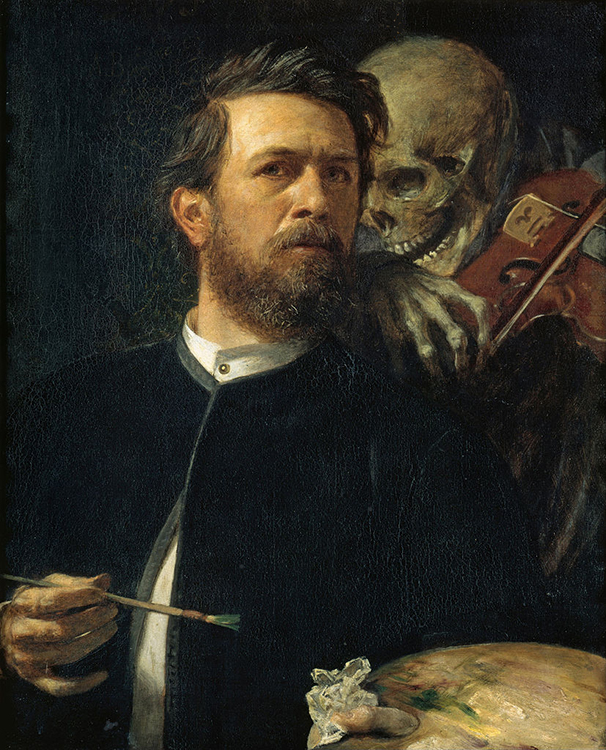
Abbado and the orchestra brought out the more demonic elements in the second movement’s Totentanz (Dance of Death). Leader Peter Danis, clearly relished and characterized his scordatura violin solos most vividly, evoking Freund Hein (Friend Henry) - a skeleton who plays the fiddle and is a traditional German personification of death by poet Matthias Claudius. According to Mahler's widow Alma, Mahler took inspiration for this movement from an 1872 painting by the Swiss artist Arnold Böcklin entitled Self-Portrait with Death playing the Fiddle. Calmer interludes offered some contrast in the manner of a Ländler, Abbado and the MPO wonderfully capturing the spirit of the dance.
The third movement is marked “serene” and Abbado unfolded it in a hymn-like manner with ravishing string tone that almost verged on inaudibility. The set of variations that slowly unfolded was full of calm nobility and tender soulfulness, sculpted into longer arches of sound into a higher state of bliss. When the music changed into a grandiloquent E major signaling the opening of heaven's gates, rising soprano Lauren Snouffer tip-toed into an empty seat in the midst of the first violins.
Moving centre stage swiftly as the fourth movement began, Snouffer would have benefited from sharper German diction and better projection over the orchestra. Nonetheless, her lovely tone served the text of Das himmlische Leben (The Heavenly Life) well, gorgeous and delicate. Abbado and the MPO thoughtfully complemented Mahler’s often very detailed word painting. At the end, Abbado left us relishing the radiant meadows of this ineffably beautiful view of heaven.
In the second half, Snouffer was the ardent soloist in Samuel Barber’s Knoxville: Summer of 1915 in a performance where both she and Abbado took a non-sentimental approach and a preferred moderate tempo. Her deeply moving rendition utterly enchanted the audience, though her diction was again not always ideally crystal clear.
A wondrous performance of Wagner's unequivocal masterpiece, the Tannhäuser Overture closed this magnificent concert. Abbado led the chorale invoking the Pilgrims’ Chorus in a grandly expansive and stately manner. The Allegro representing the sensual, impious Venusberg was attractively evoked: the feathery, frivolous skittishness of the strings, the uneasy, irregular swellings of sound threatening to go ballistic and the percussive battery of the grand central climax. The final reprise of the Pilgrim’s Chorus was once again sumptuous and solemn, with an altogether righteous Wagnerian majesty.
Mahler's Fourth Symphony is the most classically conceived of his symphonic oeuvre and the last of his symphonies to use the texts from Das Knaben Wunderhorn, a collection of German folk poems put together at the beginning of the 19th century by Achim von Arnim and Clemens Brentano. Abbado led a beautifully paced opening first movement of the Mahler, with a relaxed gait reflecting the wondrous and bucolic nature of the piece, marked Deliberate. Not hurried - Quite genial. The playing had a spontaneous feel and the sound was beautifully balanced, allowing the upper strings and cellos to glisten with gorgeous turns of phrases and hints of luscious portamento.
Abbado and the orchestra brought out the more demonic elements in the second movement’s Totentanz (Dance of Death). Leader Peter Danis, clearly relished and characterized his scordatura violin solos most vividly, evoking Freund Hein (Friend Henry) - a skeleton who plays the fiddle and is a traditional German personification of death by poet Matthias Claudius. According to Mahler's widow Alma, Mahler took inspiration for this movement from an 1872 painting by the Swiss artist Arnold Böcklin entitled Self-Portrait with Death playing the Fiddle. Calmer interludes offered some contrast in the manner of a Ländler, Abbado and the MPO wonderfully capturing the spirit of the dance.
The third movement is marked “serene” and Abbado unfolded it in a hymn-like manner with ravishing string tone that almost verged on inaudibility. The set of variations that slowly unfolded was full of calm nobility and tender soulfulness, sculpted into longer arches of sound into a higher state of bliss. When the music changed into a grandiloquent E major signaling the opening of heaven's gates, rising soprano Lauren Snouffer tip-toed into an empty seat in the midst of the first violins.
Moving centre stage swiftly as the fourth movement began, Snouffer would have benefited from sharper German diction and better projection over the orchestra. Nonetheless, her lovely tone served the text of Das himmlische Leben (The Heavenly Life) well, gorgeous and delicate. Abbado and the MPO thoughtfully complemented Mahler’s often very detailed word painting. At the end, Abbado left us relishing the radiant meadows of this ineffably beautiful view of heaven.
In the second half, Snouffer was the ardent soloist in Samuel Barber’s Knoxville: Summer of 1915 in a performance where both she and Abbado took a non-sentimental approach and a preferred moderate tempo. Her deeply moving rendition utterly enchanted the audience, though her diction was again not always ideally crystal clear.
A wondrous performance of Wagner's unequivocal masterpiece, the Tannhäuser Overture closed this magnificent concert. Abbado led the chorale invoking the Pilgrims’ Chorus in a grandly expansive and stately manner. The Allegro representing the sensual, impious Venusberg was attractively evoked: the feathery, frivolous skittishness of the strings, the uneasy, irregular swellings of sound threatening to go ballistic and the percussive battery of the grand central climax. The final reprise of the Pilgrim’s Chorus was once again sumptuous and solemn, with an altogether righteous Wagnerian majesty.
Friday, 1 September 2017
MPO's 20th season brings many veritable musical delights
The 2017-18 MPO season celebrates the orchestra's 20-year tenure with veritable musical delights from top conductors and soloists specially invited for this exciting year. The rising British conductor Jonathan Bloxham debuts with the orchestra in a colourful programme that includes Brahms' magnificent Symphony No 1.
The MPO devotes two concerts to the centenary tribute to Leonard Bernstein with a concert of the centenarian's Broadway music and another concert of his Symphony No 2 with pianist Conrad Tao and Symphonic Dances from West Side Story, led by Bernstein's protege, Eiji Oue.
Returning Japanese conductor Kazuki Yamada inspires us with 2 musical views of Byron's Manfred, with Schumann's Manfred Overture as well as Tchaikovsky's epic Manfred Symphony.
Experienced maestro Roberto Abbado brings us a lovely programme that includes Mahler's heavenly Symphony No 4, with the American soprano Lauren Snouffer.
Russian conductor Stanislav Kochanovsky brings us two programmes of varied fare, with Mahler's triumphant Seventh Symphony as well as a vocal Russian night with Rachmaninov's The Bells and scenes from Tchaikovsky's lyric opera Eugene Onegin.
One of the perennial favourite conductors here with the MPO, Mark Wigglesworth returns with two excellent programmes featuring Beethoven's dramatic Third Piano Concerto with Malaysian soloist Foo Mei Yi and Rachmaninov's lyrical Third Symphony as well as Bruch's evergreen Violin Concerto No 1 with soloist Joshua Bell and Bruckner's majestic Seventh Symphony.
Veteran Austrian conductor, Hans Graf brings us a heroic programme of Richard Strauss' Horn Concerto No 2 and Beethoven's epic Eroica Symphony.
German-Japanese conductor Jun Märkl delights us with a youthfully exuberant programme of Debussy's Children's Corner Suite, Beethoven's First Piano Concerto and Richard Strauss' Don Juan and Till Eulenspiegel's Merry Pranks.
Other star violinists who are making their debut in the MPO's 20th season include the French violinist Renaud Capuçon who brings us Bartok's folksy Second Violin Concerto and the Latvian violinist Baiba Skride, who plays the technically challenging Sibelius Violin Concerto.
Pianists who also grace the season are Tengku Irfan, who performs Beethoven's regal "Emperor Concerto", Jean-Yves Thibaudet with his rendition of St Saens' exotic Fifth Piano Concerto ("Egyptian"), Bobby Chen in Beethoven's lyrical Fourth Piano Concerto and Loo Bang Hean in Beethoven's youthful Second Piano Concerto.
A key visiting orchestra this year is the Singapore Symphony Orchestra under Lan Shui and they bring us an attractive Brahms' programme, which includes the sunny and lyrical Second Symphony.
Fun and laughter will be the order of the concert as the zany violin and piano duo of Igudesman and Joo bring their own unique style of superlative music making and comedy in their new show called Upbeat.
Ella, Malaysia's Queen of Rock will present the first ever solo concert in DFP featuring a local rock artist, backed by a fully symphonic Malaysian Philharmonic Orchestra.
The 2017-18 MPO season promises many concerts of varied fare, with great artists in wonderful repertoire. For further information, visit www.mpo.com.my or call (03) 2331 7007.
The MPO devotes two concerts to the centenary tribute to Leonard Bernstein with a concert of the centenarian's Broadway music and another concert of his Symphony No 2 with pianist Conrad Tao and Symphonic Dances from West Side Story, led by Bernstein's protege, Eiji Oue.
Returning Japanese conductor Kazuki Yamada inspires us with 2 musical views of Byron's Manfred, with Schumann's Manfred Overture as well as Tchaikovsky's epic Manfred Symphony.
Experienced maestro Roberto Abbado brings us a lovely programme that includes Mahler's heavenly Symphony No 4, with the American soprano Lauren Snouffer.
Russian conductor Stanislav Kochanovsky brings us two programmes of varied fare, with Mahler's triumphant Seventh Symphony as well as a vocal Russian night with Rachmaninov's The Bells and scenes from Tchaikovsky's lyric opera Eugene Onegin.
One of the perennial favourite conductors here with the MPO, Mark Wigglesworth returns with two excellent programmes featuring Beethoven's dramatic Third Piano Concerto with Malaysian soloist Foo Mei Yi and Rachmaninov's lyrical Third Symphony as well as Bruch's evergreen Violin Concerto No 1 with soloist Joshua Bell and Bruckner's majestic Seventh Symphony.
Veteran Austrian conductor, Hans Graf brings us a heroic programme of Richard Strauss' Horn Concerto No 2 and Beethoven's epic Eroica Symphony.
German-Japanese conductor Jun Märkl delights us with a youthfully exuberant programme of Debussy's Children's Corner Suite, Beethoven's First Piano Concerto and Richard Strauss' Don Juan and Till Eulenspiegel's Merry Pranks.
Other star violinists who are making their debut in the MPO's 20th season include the French violinist Renaud Capuçon who brings us Bartok's folksy Second Violin Concerto and the Latvian violinist Baiba Skride, who plays the technically challenging Sibelius Violin Concerto.
Pianists who also grace the season are Tengku Irfan, who performs Beethoven's regal "Emperor Concerto", Jean-Yves Thibaudet with his rendition of St Saens' exotic Fifth Piano Concerto ("Egyptian"), Bobby Chen in Beethoven's lyrical Fourth Piano Concerto and Loo Bang Hean in Beethoven's youthful Second Piano Concerto.
A key visiting orchestra this year is the Singapore Symphony Orchestra under Lan Shui and they bring us an attractive Brahms' programme, which includes the sunny and lyrical Second Symphony.
Fun and laughter will be the order of the concert as the zany violin and piano duo of Igudesman and Joo bring their own unique style of superlative music making and comedy in their new show called Upbeat.
Ella, Malaysia's Queen of Rock will present the first ever solo concert in DFP featuring a local rock artist, backed by a fully symphonic Malaysian Philharmonic Orchestra.
The 2017-18 MPO season promises many concerts of varied fare, with great artists in wonderful repertoire. For further information, visit www.mpo.com.my or call (03) 2331 7007.
Wednesday, 15 February 2017
Krylov and Abbado in a magnificent Italian night
This was maestro Roberto Abbado’s second concert in Kuala Lumpur. Having missed his debut here last time, I was glad that I caught the still youthful looking 64-year old maestro this time. Billed as an “Italian Symphony” night, there was a predominance of the A minor and A major keys in this concert.
Berlioz’s “Roman Carnival Overture” was the fine concert opener, especially with Abbado’s swift and upbeat tempi. The creamy-toned MPO viola section canonically answered the superbly played cor anglais solo by Michael Austin in the Andante sostenuto section. After a chromatic flourish in the woodwinds, the whole orchestra performed brilliantly to open this Italian themed concert with much flair and aplomb.
The Paganini Violin Concerto No 5 in A minor was the next piece in the concert. The excellent Russian soloist, 46-year old Sergej Krylov made his debut in Kuala Lumpur in the concerto, which was also receiving its premiere performance in the DFP Hall.
From the dramatic opening tutti which bears familiar resemblance to an earlier Paganini piece, the Sonata Varsavia, Abbado and Krylov worked hand in glove to present this rarely performed concerto in an excellent musical light.
With the composer’s brilliant high-wire writing of spectacular scales and arpeggios, double and triple stops, artificial harmonics and ricochet bowing, Krylov’s marvellous technique showed literally no sign of strain. More importantly, Krylov’s interpretation was a musical success as the lyrical portions were given their due.
Abbado worked in hand with Krylov, making minor slowing in tempi to accommodate the lyrical and melodious portions, whilst making minor accelerandos to emphasize the more dramatic and operatic sections of the concerto.
The only musical issue in the first movement was the choice of Krylov’s cadenza that seemed a bit prolix and did not make much use of the musical material of the first movement. Perhaps it might have been better to use the Remy Principe/Salvatore Accardo cadenza, which is found on Accardo’s 1970s DG recording.
The second movement was a superb performance from Krylov in terms of cantabile and legato bowing, akin to a very smooth operatic aria sung on the violin. Lovely and modulated vibrato usage also aided the very succulent Italianate tone that Krylov drew from his instrument.
The final third movement gave Krylov yet more chances to display his musical vivacity coupled with abundant technical fireworks. This time, the display included a cheeky and impish Rondo theme that delighted the audience on its myriad repetitions.
That superb performance drew endless applause from the KL audience and Krylov obliged them with yet more Paganini, his famous 24th Caprice in A minor. This encore was also stunning in its execution especially the variation in tenths that was taken very swiftly and the difficult left-hand pizzicato section.
The audience refusing to let him go after the 24th Caprice, Krylov played yet another encore. This time, he did not announce the encore but launched straight into Paganini’s 13th Caprice in B flat major. With its opening descending chromatic thirds, Krylov managed to make the notes to sound like “The Devil’s Laughter”, which is what this Caprice is fondly nicknamed.
The second half of the program began with Luciano Berio's Four Original Versions of "Ritirata notturna di Madrid" after Boccherini's String Quartet in C major, nicknamed Night Music of the Streets of Madrid.
The work begins with soft snare drums, which are then followed by additional instruments joining in the festivities. After the grand crescendo is reached, the music begins a slow and steady decrescendo. The MPO and Abbado obviously enjoyed playing this delightful piece.
The final work was Mendelssohn's familiar Symphony No 4 in A major "Italian". Maestro Abbado took the first movement at joyous pace. Played with the full lead-back into exposition repeat, this was very fulfilling as we were able to hear Mendelssohn’s immense joy on seeing Italy for the first time.
The second movement provided a good opportunity for the MPO winds to demonstrate their warmth and subtlety, depicting a procession in Naples. The violins flowed smoothly in their legato portions in the third movement, whilst the French horns played well without any spilt notes in the Trio portion of that movement.
The final movement (Saltarello) was taken at a brisk pace with some really fine and rhythmic staccato violin playing. Maestro Abbado and the MPO sounded really well together and enjoyed many rounds of deserved and loud applause.
It would be very nice to watch yet another Italian night here in future with Abbado and Krylov. Perhaps a programme like Rossini’s Italian Girl in Algiers Overture, Paganini’s Fourth or Sixth Violin Concerto, Respighi’s Pines of Rome and Tchaikovsky's Capriccio Italien may appeal to audiences here.
Berlioz’s “Roman Carnival Overture” was the fine concert opener, especially with Abbado’s swift and upbeat tempi. The creamy-toned MPO viola section canonically answered the superbly played cor anglais solo by Michael Austin in the Andante sostenuto section. After a chromatic flourish in the woodwinds, the whole orchestra performed brilliantly to open this Italian themed concert with much flair and aplomb.
The Paganini Violin Concerto No 5 in A minor was the next piece in the concert. The excellent Russian soloist, 46-year old Sergej Krylov made his debut in Kuala Lumpur in the concerto, which was also receiving its premiere performance in the DFP Hall.
From the dramatic opening tutti which bears familiar resemblance to an earlier Paganini piece, the Sonata Varsavia, Abbado and Krylov worked hand in glove to present this rarely performed concerto in an excellent musical light.
With the composer’s brilliant high-wire writing of spectacular scales and arpeggios, double and triple stops, artificial harmonics and ricochet bowing, Krylov’s marvellous technique showed literally no sign of strain. More importantly, Krylov’s interpretation was a musical success as the lyrical portions were given their due.
Abbado worked in hand with Krylov, making minor slowing in tempi to accommodate the lyrical and melodious portions, whilst making minor accelerandos to emphasize the more dramatic and operatic sections of the concerto.
The only musical issue in the first movement was the choice of Krylov’s cadenza that seemed a bit prolix and did not make much use of the musical material of the first movement. Perhaps it might have been better to use the Remy Principe/Salvatore Accardo cadenza, which is found on Accardo’s 1970s DG recording.
The second movement was a superb performance from Krylov in terms of cantabile and legato bowing, akin to a very smooth operatic aria sung on the violin. Lovely and modulated vibrato usage also aided the very succulent Italianate tone that Krylov drew from his instrument.
The final third movement gave Krylov yet more chances to display his musical vivacity coupled with abundant technical fireworks. This time, the display included a cheeky and impish Rondo theme that delighted the audience on its myriad repetitions.
That superb performance drew endless applause from the KL audience and Krylov obliged them with yet more Paganini, his famous 24th Caprice in A minor. This encore was also stunning in its execution especially the variation in tenths that was taken very swiftly and the difficult left-hand pizzicato section.
The audience refusing to let him go after the 24th Caprice, Krylov played yet another encore. This time, he did not announce the encore but launched straight into Paganini’s 13th Caprice in B flat major. With its opening descending chromatic thirds, Krylov managed to make the notes to sound like “The Devil’s Laughter”, which is what this Caprice is fondly nicknamed.
The second half of the program began with Luciano Berio's Four Original Versions of "Ritirata notturna di Madrid" after Boccherini's String Quartet in C major, nicknamed Night Music of the Streets of Madrid.
The work begins with soft snare drums, which are then followed by additional instruments joining in the festivities. After the grand crescendo is reached, the music begins a slow and steady decrescendo. The MPO and Abbado obviously enjoyed playing this delightful piece.
The final work was Mendelssohn's familiar Symphony No 4 in A major "Italian". Maestro Abbado took the first movement at joyous pace. Played with the full lead-back into exposition repeat, this was very fulfilling as we were able to hear Mendelssohn’s immense joy on seeing Italy for the first time.
The second movement provided a good opportunity for the MPO winds to demonstrate their warmth and subtlety, depicting a procession in Naples. The violins flowed smoothly in their legato portions in the third movement, whilst the French horns played well without any spilt notes in the Trio portion of that movement.
The final movement (Saltarello) was taken at a brisk pace with some really fine and rhythmic staccato violin playing. Maestro Abbado and the MPO sounded really well together and enjoyed many rounds of deserved and loud applause.
It would be very nice to watch yet another Italian night here in future with Abbado and Krylov. Perhaps a programme like Rossini’s Italian Girl in Algiers Overture, Paganini’s Fourth or Sixth Violin Concerto, Respighi’s Pines of Rome and Tchaikovsky's Capriccio Italien may appeal to audiences here.
Subscribe to:
Posts (Atom)