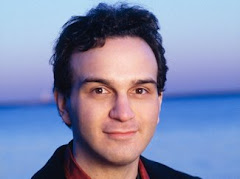
A popular Germanic programme of Beethoven and Brahms ensured a capacity house at the DFP for Eiji Oue's concert with the MPO. Opening the concert with Beethoven's Leonore No. 3 Overture - the best of his 4 overtures written for his only opera Fidelio, maestro Oue gave a vibrant and zealous account, presenting a deliberate opening which added an extra degree of tension before leading into a robust airing of the main theme, with a particularly fine patina of rich string sound and dignified brass tone.
Unfortunately, the woodwinds' balance was recessed, especially the important heroic flute solo. After the ensuing quieter interlude, the off-stage trumpet solo was crisply played by William Theis. The music then soon re-erupted into a rumbustious and joyful blast, leading to a terrifically exciting conclusion.
The unquestionable highlight of the concert was the Brahms' Double Concerto Op 102, performed by the two superb DFP debutants, the South Korean violinist Soyoung Yoon and Hungarian cellist István Várdai. The sense of empathy between them was palpable throughout the entire performance. The solo violin and cello truly sang as one single instrument with an extended range and rich timbre. It was perfect rhythmic and dynamically coordinated duet playing.
Oue and the MPO announced the brief forte opening unison statement with indomitable vigour, whose expressive strength was taken up and even amplified by the solo cello’s and violin's opening pensive recitatives. Várdai’s eloquent cello playing registered more strongly than Yoon’s lively contribution, though both soloists exhibited faultless technical and musical command of the score. The minor tonal imbalance was probably due to Várdai’s superb 1673 “ex-Du Pre-Harrell” Stradivarius cello outshining Yoon's fine 1773 "ex-Bückeburg" JB Guadagnini violin, despite maestro Oue's judicious control of the orchestral textures and dynamic balance.
The flowingly paced D major Andante was radiantly played, with Yoon and Várdai spinning warm, silky and eloquent melodic lines of intimate heavenly beauty. Várdai began the brightly-paced final Vivace non troppo movement in an impish manner, bringing out its Hungarian gypsy flavour and folk-dance qualities duly answered by the equally mischievous-sounding Yoon. As the music turned to its tonic major, both soloists, the MPO and Oue brought Brahms' magnificent concerto to a grand conclusion.
After the interval, Oue's interpretation of Beethoven’s Symphony No 5 in C minor was a good symphonic account. Oue thrashed around wildly in all directions, often exceeding the exaggerated stage manner of his mentor Leonard Bernstein as he implored the MPO to give yet more and more. Often the MPO's response was slightly muted and detached relative to Oue's original intentions and it was frankly a bit tiring to watch maestro Oue leaping around on the podium.
Gesturing vigorously to keep a palpable decent pace, he drew from the MPO variegated layers of colour and a set of dynamics that verged on the louder end of the scale for the first movement. The richness of the lower strings initiated the slow movement and Oue painted a sumptuous tapestry of sound, interspersed with martial fanfares from the brass.
The warmth of the lower strings was also highlighted in the third movement, where Oue’s fondness for playing with generally louder dynamics made the mysterious transition from the third movement's C minor into the blazing C major opening fanfare of the fourth movement less effective than it could be. Tempo-wise, the transition from the third to fourth movement seemed okay, albeit a hair's breadth slower than ideal. In the fourth movement, Maestro Oue’s exaggerated gestures produced a fine forward momentum, leading to a cathartic end of Beethoven’s mighty opus.
Showing posts with label Brahms. Show all posts
Saturday, 20 October 2018
Tuesday, 26 September 2017
Bloxham's brilliant MPO debut
A much-awaited concert was the DFP debut of Jonathan Bloxham with the MPO in August 2017. 30-year old Bloxham is the assistant conductor of the City of Birmingham Symphony Orchestra (CBSO), which is an orchestra renowned for picking outstanding conducting talent at tender ages and maturing them into famed household names like Sir Simon Rattle (later of the Berlin Philharmonic Orchestra), Sakari Oramo (later of the BBC Symphony Orchestra) and Andris Nelsons (later of the Boston Symphony and Leipzig Gewandhaus Orchestras).
An initial impression of the concert was that the content of the programme remained too much in the minor keys. The opening piece, Estonian composer Arvo Pärt's Cantus in Memoriam Benjamin Britten, which I first heard in London in 1982 at a London Philharmonic Orchestra concert under Rudolf Barshai, brought back memories of how poignant Pärt's composition was.
Bloxham and the strings of the MPO brought a hypnotic stillness to the Cantus, with a slowly building intensity throughout interspersed with a three-note motif on a tubular bell, as the single Aeolian melodic motif diverged throughout the string lines and spiralled downwards with a gravitational inevitability to the final A minor chord. The MPO gave it a somewhat warmer, lusher timbre than that with which this spare, pure piece is often performed.
Bloxham then directed the MPO from the cello, playing Vivaldi's Cello Concerto in C minor RV401. This was a very engaging performance of the cello concerto, played in an exceptionally vivacious manner, reminiscent of the way the Venice Baroque Orchestra and Andrea Marcon perform Vivaldi with normal concert tuning (A=440Hz) but with great character and vivacity as well as wide dynamic contrasts.
Due to the vivacious speeds set in the outer movements, there were a few garbled notes produced by Bloxham and the top A-string notes on the very warm-toned 1710 Giuseppe filius Andrea Guarneri cello (on loan from Florian Leonhard Fine Violins, London) sounded a mite weaker than its lower strings.
Next up, Bloxham and the MPO served us with an exceptionally warm interpretation of Webern's Langsamer Satz of highly Romantic intertwining threads and superb string playing from the MPO.
We were treated to yet another Vivaldi Concerto next, his Concerto in D minor for 2 violins and cello RV565 (Op 3 No 11). Peter Danis and Timothy Peters, the leaders of the 1st and 2nd violin sections of the MPO strings took on the solo parts, whilst Bloxham played the cello. This was yet another vivacious performance of the Vivaldi, with a beautifully sustained and lyrical Siciliano second movement led by Peter Danis.
After the interval, we saw Bloxham's talent in leading the MPO to a soaring interpretation of Brahms' grand Symphony No 1. His approach was classically sculptured and precise, with steady traditional pacing right through the whole symphony. Bloxham captured the weightiness of the opening movement at a comfortable tempo until a melancholy oboe solo played exquisitely by Simon Emes broke the initial turbulent atmosphere. The first movement (played sans the exposition repeat) was cogently argued and well balanced, without the raging timpani overpowering the orchestra.
The second movement flowed smoothly and provided a mesmerisingly peaceful reprieve from the turbulent first movement. The trio of solo violin (Peter Danis), horn (Grzegorz Curyla) and oboe (Simon Emes) was particularly beautiful with lyrical melodies that seemed to soar out of their instruments. The third movement then followed with Bloxham imparting an appropriately genial character to it.
The fourth movement is the trickiest for any conductor to master. Bloxham managed all the difficult tempi changes superbly, especially the pizzicato accelerando section twice and the transitioning of the Piu Andante section to the hymn portion marked, Allegro non troppo, ma con brio.
Everything here felt just right: from the brief trombone chorale (later triumphantly revisited), to the hymn that famously echoes the Ode to Joy theme, through to the vigorous coda that was full of excitement and spark. Bloxham made no big pullback for the brass chorale and the final pages made for a very grand and thrilling close.
With Bloxham's brilliantly conducted MPO debut, it would be great to see him back in KL in the near future in more Romantic and Baroque fare like Schoenberg's Verklärte Nacht (Transfigured Night) Op 4 in an orchestral guise and Vivaldi's Concerto in A minor for 2 violins RV522 (Op 3 No 8) respectively.
Labels:
Brahms,
CBSO,
Jonathan Bloxham,
MPO,
Pärt,
Peter Danis,
Timothy Peters,
Vivaldi,
Webern
Monday, 29 August 2016
A charitable Frühwirth recital
A charity concert held at the KL and Selangor Chinese Assembly Hall in aid of PA Nepal and the Medical Aid Fund brought the renowned Austrian violinist David Frühwirth back to Malaysian shores in December 2015.
The programme opened with the first movement of Charles Auguste de Beriot’s Duo Concertante No 1 in G minor for 2 violins, with Frühwirth playing 1st violin and Liew Yen Nee on the 2nd violin. This was a good introduction to the evening as de Beriot fell into obscurity since his glory days as professor at the Brussels Conservatory between 1843 and 1852. This duet movement was delightful, with frequent alternations of the melodic line between Frühwirth and Liew.
The main feature of the evening was the following two pieces: Brahms' Scherzo in C minor (from the F.A.E. Sonata) and César Franck’s evergreen Violin Sonata in A major.
Accompanied by Ng Chong Lim, Frühwirth gave us a virile interpretation of the Brahms Scherzo with an upbeat speed that broadened out ever so slightly as the radiant C major “tierce di picardie” ending.
The true musical delight of the evening was the passionate performance of the Franck Violin Sonata. In this piece, Ng was an equal partner to Frühwirth, playing the opening movement at a lovely flowing pace. Frühwirth and Ng played the turbulent second movement with equal force and occasionally with some respite in the more tender moments.
The ruminative and improvisatory third movement saw both Frühwirth and Ng exploring especially extremes in pianissimo as well as use of high position notes on the violin by Frühwirth to very good effect.
The culmination of the sonata’s greatness is fulfilled by its canonic form as well as the cyclical form that Franck pioneered. Frühwirth and Ng brought the sonata to a grand conclusion, playing powerfully towards its magnificent ending.
The second half featured the Pastorale String Ensemble, conducted and led by Frühwirth from the violin in some pieces. Mendelssohn’s Vier Kinderstücke Op 72 and Haydn’s String Quartet Op 3 No 5 (1st movement) flanked Massenet’s Méditation from Thaïs and Kreisler’s Liebesleid, with Frühwirth playing wonderfully on his 1707 ex-Brüstlein Stradivarius.
The Kreisler was amazing in its suave Austrian delivery. Frühwirth was in his element here and the rubato and subtle Waltz inflections were just very close to Kreisler’s own rendition of a much loved favourite.
The hall resonance was lacking but the Stradivarius violin stood out in its full sonic glory. Sadly, the instruments of the Pastorale String Ensemble were poor and did not match well with Frühwirth’s violin.
The evening ended with McLean’s Tango and a Christmas encore.
Subscribe to:
Posts (Atom)